
Jurist and Author of Kifāyat al-Uṣūl
Author: Ali Jafari
Volume One, Second Edition
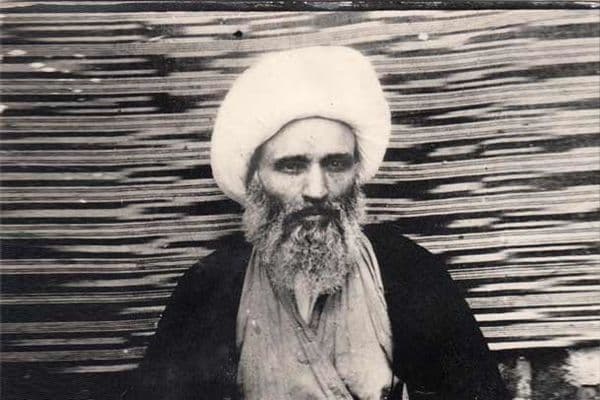
Mulla Muhammad Kazim Heravi Najafi, known as Akhund Khurasani, son of Mulla Husayn Heravi, was born in the city of Mashhad in 1255 AH / 1839 CE (Kafayi, 1359: 78). Some sources identify his father’s name as Ghulam Nabi and state that he came from the Darafshan winter settlement in Tirin, Uruzgan (Qandahari, 1362: 25). Ghulam Nabi belonged to the Barbari clan of Mashhad and was among the Hazara people of Uruzgan who migrated to Mashhad (Mirnia, 1369: 171; Qandahari, 1362: 25). Muhammad Kazim Khurasani studied preliminary sciences and advanced levels of religious sciences in Mashhad.
Then, in 1277 AH, he briefly attended the lessons of Islamic philosophy taught by Mulla Hadi Sabzevari, the famous philosopher and mystic of that period, in Sabzevar (Kafayi, 1359: 35–38). After two years of study in Sabzevar and Tehran, he travelled to Najaf (Abdul Rahim, 1392 AH: 25). In Najaf, Akhund Khurasani studied for two and a half years under Sheikh Murtaza Ansari (author of the religious sciences textbooks Rasa’il and Makāsib). Afterwards, he studied jurisprudence (fiqh) and principles of jurisprudence (uṣūl) under Muhammad Hasan Mirza Shirazi. Sayyid Ali Shushtari (a teacher of jurisprudence) and Sheikh Razi Najafi were among his other teachers in these fields (Najafi Quchani, 1378: 11).
After Mirza Shirazi left Najaf for Samarra in 1291 AH, Akhund Khurasani independently established his own teaching circle. After some time, he became one of the most famous teachers of the Najaf seminary (hawza) (Aqa Buzurg Tehrani, 1388: vol. 5, 65). Many of Mirza Shirazi’s students who remained in Najaf attended Akhund Khurasani’s lessons at their teacher’s recommendation (Kafayi, 1376: 72–73). Following Mirza Shirazi’s death and the return of many of his students from the Samarra seminary to Najaf, where they joined Akhund Khurasani’s classes, Akhund’s position as the leading teacher of the Najaf seminary gradually became established. His lessons came to be recognised as the largest teaching circle in the Najaf religious institution (Shahrestani, 1330 AH: 341). The main strengths of his teaching were considered to be his ability to explain concepts, present arguments and proofs, and convince his students (Najafi, 1379: 54).
Najafi Quchani, one of Akhund’s students, provides many details about his teaching style in his book Safar-e Sharq (Journey to the East). Quchani had experienced the lessons of many teachers before meeting Akhund and had been dissatisfied with most of them. However, after attending Akhund’s class, he wrote:
“I enjoyed it so much and understood his discussions so well that I wished I could dance in the middle of the lesson.” (Quchani, 1375: 196)
In a letter sent to one of his friends in Isfahan, Quchani transcribed one of Akhund’s lessons and wrote:
“Akhund’s lesson is brief and beneficial in such a way that from every word, a thousand words can be understood regarding its correctness and incorrectness. Consider this sentence, which expresses the essence of the argument... If you truly wish to study and understand things, come to Najaf, and specifically attend Akhund’s lessons. Studying is confined to his circle, and teaching is also unique to him.” (Ibid.: 195)
Quchani’s memoirs also contain notable observations about Akhund’s private life, describing him as someone who was “not hypocritical and in no way a seeker of worldly things.” He quotes a certain Khurasani as saying:
“I met Akhund and privately said to him: Tell me honestly, what do you want from God? He replied: I only want two students who understand my words. After that, I want neither government, nor leadership, nor followers, nor anything similar.”
Quchani also recounts that at the beginning of Akhund’s teaching career, it was customary for scholars to use religious funds available to them to financially support students in order to attract them. Akhund refused to do this, except later when students came to him naturally without such incentives (ibid.: 196).
Throughout his life, Akhund Khurasani trained many students and jurists. The number of his students has been recorded as approximately 2,200, many of whom became mujtahids (qualified authorities capable of independent legal reasoning) (Akhund Khurasani, 1384). Some of his students included Mirza Muhammad Husayn Na’ini, Sayyid Abul Hasan Isfahani, Sayyid Husayn Tabataba’i Borujerdi, Aqa Zia Iraqi, Abd al-Karim Ha’iri Yazdi (founder of the Qom seminary), Sayyid Sadr al-Din Sadr, Husayn Ali Nakhudaki Isfahani, Sayyid Abdullah Behbahani, Abbas Qummi, Sayyid Hasan Modarres, Sayyid Abdullah Behbahani, and Aqa Buzurg Tehrani (Abdul Rahim, 1392 AH: 35–36).
Akhund Khurasani was aware of political and social affairs in the Islamic world. He informed his teacher, Muhammad Hasan Mirza Shirazi, about the massacre of Hazaras and Afghan Shi‘a during the rule of Amir Abd al-Rahman Khan. Mirza Shirazi sent a telegram to Nasir al-Din Shah regarding this matter, asking him to request that Queen Victoria of Britain advise Amir Abd al-Rahman, the king of Afghanistan—who was under British influence at the time—to end the massacres of Hazaras and Shi‘a. It is said that this led Abd al-Rahman to adopt a milder approach towards the Hazaras (Qandahari, 1362: 25).
Akhund Khurasani was a supporter of constitutionalism in Iran. Contrary to the prevailing opinion of some scholars, including his teacher Sheikh Ansari, he considered absolute authority (wilayat al-faqih al-mutlaqa) to belong exclusively to God. He regarded the legislative authority of the Prophet and Imams as limited to broad and important political matters. He did not consider absolute authority applicable to people’s private lives and believed that legitimate religious government was only possible during the period of the infallible Imam; all other forms of government were non-religious (ghayr shar‘i) (Kadivar, 1387: 11–13).
In this context, he wrote a commendation (taqriz) for Muhammad Husayn Na’ini’s important book Tanbih al-Ummah wa Tanzih al-Millah (Awakening the Nation and Purifying the Community). He considered despotism incompatible with Islam and believed that limiting absolute political power was necessary. His theory and support for constitutionalists placed him in opposition to conservative scholars such as Fazlullah Nuri, who advocated a form of “legitimate religious government” (mashru‘a). Some researchers believe that, politically speaking, this position was highly reformist and transformative for its time, particularly because it came from a leading religious authority and senior jurist.
His theory of government during the occultation (ghayba) was a form of secular or customary governance (hukumat-e ‘urfi), and he considered authoritarian government absolutely forbidden because of its severe corruption. According to Akhund Khurasani’s theory, constitutionalism—despite being a type of non-religious government—should be accepted in order to prevent corruption and control tyranny. Therefore, it was not necessary for a jurist to stand at the head of government, because even the presence of a jurist would not make the government religiously legitimate. It was only necessary that such a government not legislate laws contradicting Islamic law (Kadivar, 1382).
At the end of 1328 AH / 1910 CE, Russia occupied northern Iran as far as Qazvin. Akhund Khurasani issued a religious decree (fatwa) calling for jihad against this occupation. He suspended his lessons in Najaf as a sign of protest, prohibited people from purchasing Russian goods, and decided to travel to Iran himself to encourage people to wage “jihad” against Russian forces. However, at the age of 74, he died suddenly. Some have attributed his death to poisoning by Russian agents (Kafayi, 1359: 278–281), while others have blamed British agents for his poisoning (Akhund Khurasani, 1384). In Najaf, he established three religious schools—large, medium, and small—and also helped establish several modern schools where Persian was taught (Abdul Rahim, 1392 AH: 139–143).
The works of Akhund Khurasani can be divided into three categories: authored works, legal opinions (fatwas), and transcriptions of his lessons. His works on principles of jurisprudence, philosophy, and law consist of independent writings as well as commentaries, annotations, and marginal notes on the works of others.
His greatest and most famous work on uṣūl is Kifāyat al-Uṣūl, which he completed in two years (Mokhtari, 1367: 153). This work became the most important and final textbook for advanced levels of religious seminaries and remains central to advanced discussions of uṣūl in Islamic seminaries. Many commentaries and annotations have been written on it. After writing this book, Akhund Khurasani became known as “the author of Kifāya” (Sahib Kifāya). His descendants became known by the surname “Kafayi” or adopted this title for themselves (Bamdad, 1357, vol. 4: 1).
According to some researchers, Shi‘a principles of jurisprudence became more philosophical through Akhund Khurasani’s contributions, which can be understood as influenced by his philosophical education. This can be observed by comparing Sheikh Ansari’s Rasa’il with Akhund’s al-Kifāya. He also believed in the possibility of a sphere beyond religious commands, in which God neither commands nor prohibits. Based on this, he argued that if reason determines that an action is good and necessary, it does not necessarily follow that religious law must also declare it obligatory. Therefore, he rejected the necessary correspondence between rational obligations and religious obligations. The implication of this view is that the religious system does not expand through rational reasoning (Ahmadi, 1386: 418–419).
Other works on uṣūl include his annotations and commentaries on Fara’id al-Uṣūl (known as Rasa’il) by Sheikh Ansari; and al-Fawa’id or Risalat al-Fawa’id, his jurisprudential notes and commentaries on a large section of Sheikh Ansari’s Makāsib. His jurisprudential work Takmilat al-Tabsira is his most important legal treatise and is based on Allama Hilli’s Tabsirat al-Muta‘allimin (Aqa Buzurg Tehrani, 1403 AH: vol. 4, 412). Akhund also wrote several argumentative jurisprudential treatises, some of which were collected and published under the title al-Rasa’il al-Fiqhiyya. Another incomplete jurisprudential work is Kitab al-Ijarah (Treatise on Leasing) (Aqa Buzurg Tehrani, 1403 AH, vol. 1: 122). Another of his works is an extensive commentary on the first sermon of Nahj al-Balagha, which was mistakenly published under the name of Shari‘at Isfahani (Aqa Buzurg Tehrani, 1403 AH, vols. 7:199; 13:217; 14:144).
Akhund Khurasani married four times and had five sons and one daughter. Mehdi Kafayi Khurasani and Muhammad Kafayi Khurasani (known as Aqa Zadeh) were among the prominent figures of the Mashhad seminary. Ahmad Kafayi Khurasani was a close adviser to Muhammad Taqi Shirazi, one of the opponents of British influence in Iraq, and for this reason was sentenced to death twice by the Iraqi government. In 1303 Solar Hijri, following the death of his brother Muhammad Kafayi, he assumed leadership of the Mashhad seminary. Husayn Kafayi Khurasani became responsible for his father’s three schools in Najaf after the death of his brother Mehdi. Hasan Kafayi Khurasani served six terms as the representative of the people of Mashhad in the National Consultative Assembly and later entered the Senate as the senator for Khurasan (Kafayi, 1390: 73, 100).
The Research Institute for Islamic Sciences and Culture of the Islamic Propagation Office of the Qom Seminary held a commemorative ceremony for Akhund Khurasani on 23 Qaws 1390 Solar Hijri, marking the centenary of his death.
References:
Agha Najafi Quchani, M. (1996). Seyahat-e Sharq [A journey to the East] (2nd ed.). Hadith.
Ahmadi, M. A. (2007). Entezar-e bashar az din [Human expectations of religion]. Research Center for Islamic Sciences and Culture.
Abdulrahim, M. A. (1972). Al-Muslih al-Mujahid al-Shaykh Muhammad Kazim al-Khurasani [The reformer and mujahid, Shaykh Muhammad Kazim al-Khurasani]. Al-Nu'man Press.
Aqa Bozorg Tehrani, M. M. (1989). Tabaqat a'lam al-Shi'a: Nuqaba' al-bashar fi al-qarn al-rabi' 'ashar [Biographical classes of Shi'a scholars: Nuqaba al-Bashar in the fourteenth century] (Vol. 5). Islamic Research Foundation of Astan Quds Razavi.
Aqa Bozorg Tehrani, M. M. (1984). Al-Dhari'a ila tasanif al-Shi'a [The guide to Shi'a works] (Vols. 4, 6, 7, 13, & 14). Dar al-Adwa'.
Bamdad, M. (1978). Sharh-e hal-e rejal-e Iran dar qarn-e 12, 13 va 14-e hejri [Biographies of notable figures of Iran in the 12th, 13th, and 14th centuries AH]. Zavvar.
Encyclopaedia of Islam. (2005). Akhund Khurasani (Vol. 1, p. 772). Center for the Great Islamic Encyclopedia.
Kafa'i, A. H. (1980). Margi dar nur-e zendegani-ye Akhund-e Khurasani [A death in the light of the life of Akhund Khurasani]. Zavvar.
Kafa'i, A. R. (1997). Bayan va sharhi mukhtasar az hayat va shakhsiyat-e Akhund Mulla Muhammad Kazim Khurasani (1255–1329 AH) [A brief account and explanation of the life and personality of Akhund Mulla Muhammad Kazim Khurasani (1255–1329 AH)]. Majall-e Motale'at-e Eslami [Journal of Islamic Studies], (35–36), 11–44.
Kafa'i Khurasani, A. R. (2011). Seyri dar sire-ye elmi va amali-ye Akhund Khurasani [A study of the scholarly and practical life of Akhund Khurasani]. Bustan-e Ketab.
Kadivar, M. (2003). Site-ye shakhs-e Mohsen Kadivar [Mohsen Kadivar's personal website]. Retrieved October 2, 2019, from kadivar.com
Kadivar, M. (2008). Siasat-name-ye Khurasani [Khurasani's political treatise]. Kavir.
Qandahari, T. H. (1983). Negahi be diruz va emruz-e Afghanistan [A look at the past and present of Afghanistan] (2nd ed.). H. R. Mohajer Ghaznavi.
Mirnia, S. A. (1990). Ilha va ta'ifeha-ye 'ashayari-ye Khurasan [Tribal confederations and nomadic tribes of Khorasan]. Nasl-e Danesh.
Mokhtari, R. (1988). Naqd-e tashih-e Fava'id al-usul [A critique of the edition of Fava'id al-usul]. Majall-e Howzeh [Howza Journal], 5(25), 147–176.
Najafi Quchani, M. H. (1999). Bargi az tarik-e mo'aser [A page from contemporary history]. Haft.
Shahrestani, H. al-D. (1951). Faji'at Hazrat Ayatollah al-Khurasani [The tragedy of His Eminence Ayatollah Khurasani]. Majallat al-'Ilm, (7), 341.
Loading comments...